Kakadu plum (Terminalia ferdinandiana), also called billy goat plum or gubinge, is a small, pale-green native fruit from northern Australia, and most Australians have never tasted one. Yet it holds a remarkable record: one of the highest natural vitamin C concentrations ever measured in a fruit. Gram for gram, our lab-tested Kakadu plum has 240 times the vitamin C of a fresh orange.
Kakadu plum at a glance
- Other names: billy goat plum, gubinge, murunga, manmorlak, anmarlak
- Scientific name: Terminalia ferdinandiana
- Where it grows: across northern Australia, from the Kimberley in Western Australia through the Northern Territory to Arnhem Land and Cape York
- Season: the fruit ripens January to February in the Kimberley, and March to May in the Northern Territory
- Known for: one of the highest natural vitamin C levels ever measured in a fruit
What exactly is a Kakadu plum?
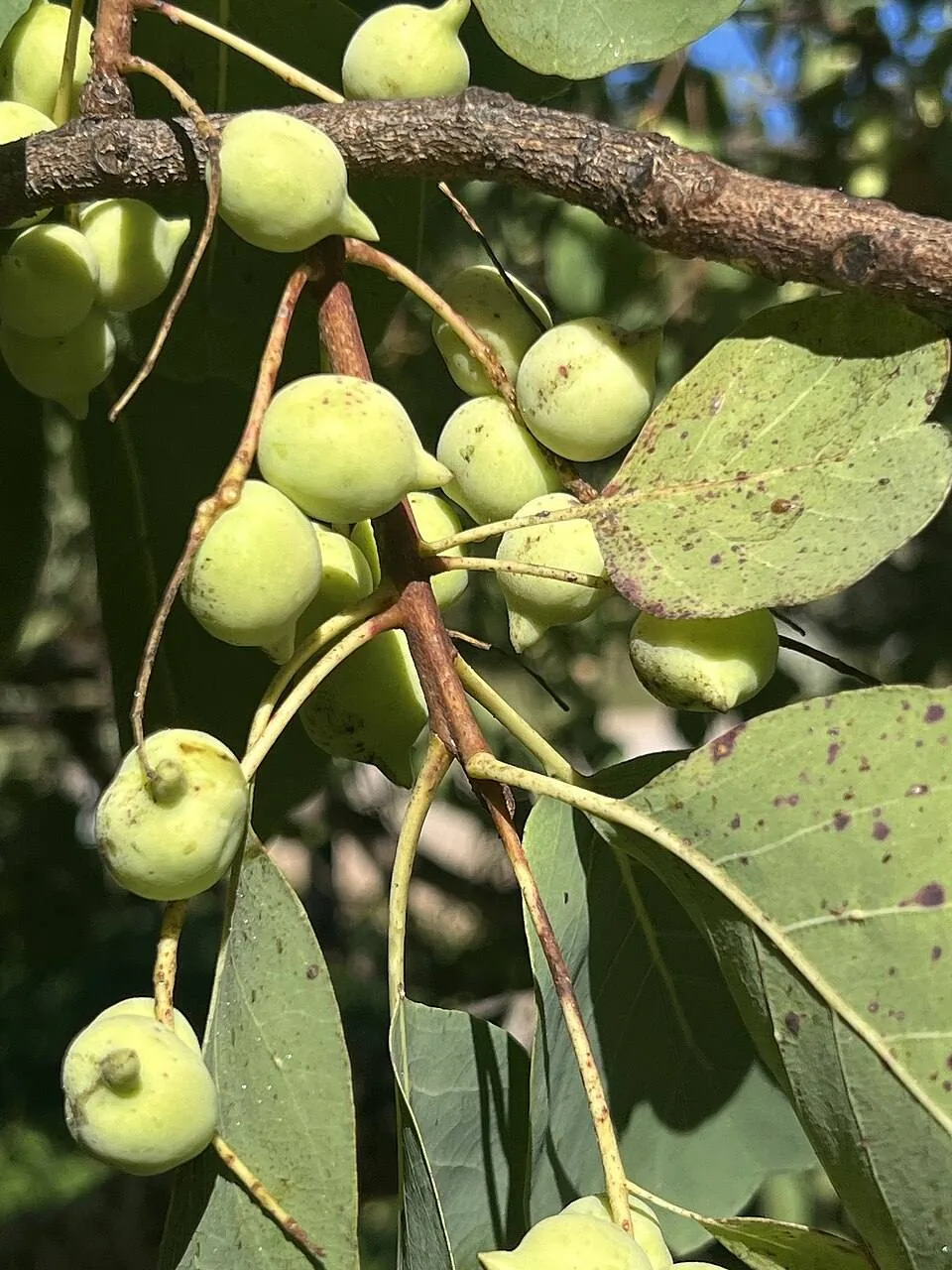
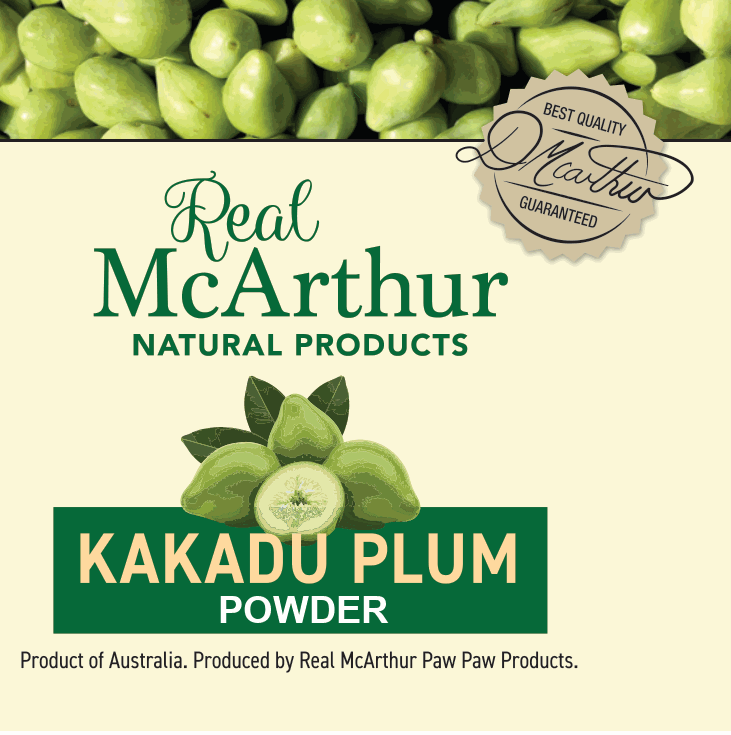
Kakadu plum is a native Australian fruit. It’s small, about the size of an olive, with a tart, refreshing taste somewhere between a green apple and a quandong. That’s too sour for most people to eat by the handful, which is why it’s usually enjoyed as a powder, in capsules, or blended into foods.
The tree is no relation to the plums in your fruit bowl. It’s a completely different plant family, and it earned the name from its plum-like look. You can read more about the fruit on Kakadu National Park’s own page.
Kakadu plum’s other names: billy goat plum, gubinge and more
Kakadu plum is Terminalia ferdinandiana. Across northern Australia it’s also called gubinge, billygoat plum (billy goat plum), green plum, salty plum, bush plum, murunga and mador. They’re all the same native fruit. The names change with the Country it grows on: gubinge in the Kimberley, billy goat plum in the Territory, and Kakadu plum on labels around the world. Read the Gubinge story →
Names in Aboriginal languages
- gubinge, madoorr and madoorroo (Bardi)
- garbiny (Yawuru and Djugan)
- kabinyn (Nyul Nyul)
- mi maraal and marnybi (Wadeye)
- anmarlak (Kundjeyhmi)
- manmorlak (Kunwinjku)
- mandjiribidj (Kuninjku)
- ŋäṉ’ka-bakarra (Yolŋu)
- murunga (East, Central and North East Arnhem)
Its scientific name
Terminalia ferdinandiana was named in 1935 by the botanist Arthur Wallis Exell, in honour of Ferdinand von Mueller, the first European botanist to collect and describe it.
Where and when Kakadu plum grows
Kakadu plum trees grow through the open tropical woodlands of northern Australia, from Broome through the Kimberley and the Top End to Arnhem Land and Cape York in Queensland. They grow in dry creek beds, on cliff tops, in coastal vine thickets, on sand dunes and at mangrove edges. In Kakadu National Park they’re common enough to spot from most walking tracks.
The tree
It’s a slender tree up to 14m tall, with creamy-grey, flaky bark, large oval leaves up to 33cm long, and spikes of small, perfumed, creamy-white flowers. It drops its leaves in the dry season. Look for the egg-shaped fruit, large round leaves and cream-coloured flower spikes.
The season
The trees flower through Kurrung, the season from August to October, and the fruit ripens at the end of the tropical summer, between March and May. For the Bininj and Mungguy people of Kakadu the plums are an important food, usually eaten raw and sometimes made into jam. (Source: Australian Government, Kakadu National Park.)
Harvest depends on where you are. In the Kimberley in Western Australia the fruit is picked from January to February, and in the Northern Territory from March to late May. The fruit is picked by hand and frozen straight away to hold its vitamin C, and it takes about 10kg of fruit to make 1kg of powder.
On farms
Today Kakadu plum is also grown on farms, in Queensland and across tropical Australia. Grafted trees can fruit in 1 to 2 years. They need the tropics, no frost, full sun and very good drainage. Much of the fruit sold in Australia is still gathered from the bush, but ours is farm-grown, for the consistent quality every batch deserves.
Kakadu plum: bush tucker, Aboriginal culture and history
Kakadu plum is true bush tucker. Aboriginal people across the north have eaten it for tens of thousands of years, long before anyone called it a superfood. Today it’s one of Australia’s best-known native superfoods, and the reason is simple: vitamin C. It was carried on long walks and hunting trips for energy and refreshment, and pulped and mixed with water to make a drink. Early records note it was “considered more valuable as a medicine rather than as a food”.
Traditionally, the fruit was used for headaches, as an antiseptic, and on swollen joints. A preparation of the inner bark was used on sores, boils, backache, ringworm, wounds, scrapes, ulcers, scabies and bites, including mosquito bites. The tree’s red sap was made into a decorative stain. The fruit was also known to keep food fresh, something University of Queensland researchers have since tested on prawns and frozen food.
In North East Arnhem Land, almost every plant has a place in the Yolngu ceremonial cycle, and some are carried in songlines and sacred designs. Gathering was part of caring for Country: the fallen fruit was commonly taken, leaving the trees to keep producing.
The same coastline has another story. For up to 400 years before colonisation, Aboriginal people of North East Arnhem Land traded trepang (sea cucumber) with Macassan and then Chinese traders, from waters close to the Kakadu plum “bush orchards”. That makes them some of Australia’s oldest exporters.
The wider world caught up in 1982, when researchers reported in The Lancet that Kakadu plum is “an outstanding food source of vitamin C”. From 1982 to 2011 there were repeated overseas attempts to patent Kakadu plum’s genetic make-up. Aboriginal communities challenged them, and it remains a contested area of native title and intellectual property.
Kakadu plum vitamin C, tested in a laboratory
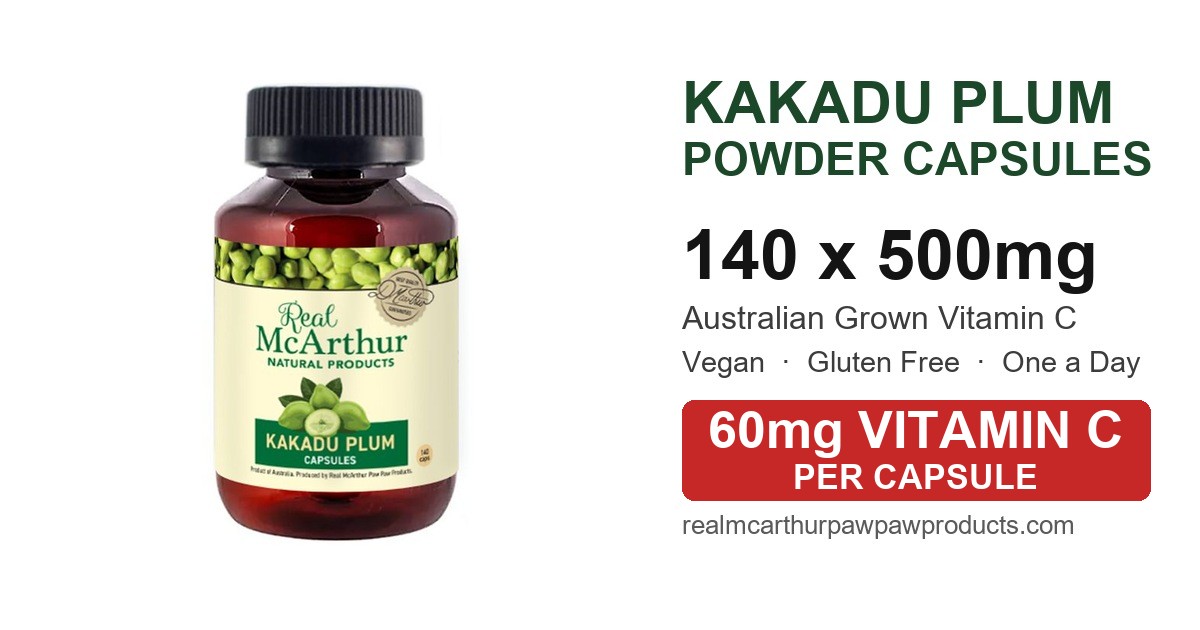
An orange, the fruit most of us treat as the vitamin C benchmark, carries roughly 50mg of vitamin C per 100g. Laboratory analysis of Kakadu plum has recorded levels that vary widely between trees and seasons, so we test our own. An independent laboratory found our powder is 12.1% natural vitamin C: 121mg in every gram, or 60mg in every capsule. A fresh orange has about half a milligram per gram, so gram for gram, our Kakadu plum has 240 times the vitamin C of a fresh orange. That makes it a true natural vitamin C powder: whole fruit, with no synthetic ascorbic acid, and one of the most concentrated food sources of vitamin C available. It’s vegan and gluten free, and our 140-capsule bottle holds 70 grams of pure freeze-dried Kakadu plum, which works out at 93c a gram.
The same testing confirmed it’s genuine Australian Terminalia ferdinandiana, with heavy metals, lead and arsenic all under limit, and clean on every microbial test. When we say laboratory-tested, we hold the certificate. Why our powder is over 240 times more vitamin C than an orange →
How much does an adult need? 45mg a day, according to Australia’s Nutrient Reference Values from the NHMRC. One of our capsules gives you 60mg. Kakadu plum is also the subject of ongoing research: the University of Queensland’s food institute has an entire program dedicated to this one fruit.
What vitamin C does for you
Vitamin C is an essential nutrient your body can’t make itself, so it has to come from food. Vitamin C contributes to normal immune system function, to iron absorption from food, and to the reduction of tiredness and fatigue. It also contributes to cell protection from free radical damage.
To pair vitamin C with iron, add a little Kakadu plum powder to meals with iron-rich foods such as spinach, lentils or beans.
Vitamin C and collagen, for skin
Vitamin C contributes to normal collagen formation for the normal function of skin. That’s why skincare labs around the world have made Kakadu plum extract a prized ingredient in serums and creams, and why we blend it into our own paw paw face cream. Vitamin C and collagen: the full science → · Kakadu plum skin care →
What’s inside a Kakadu plum?
Vitamin C is only the start. When the Australian Government analysed Kakadu plum in its 2009 report, lab scans found over 100 compounds, so many overlapping that some still don’t have names. Of every fruit, herb and spice in that report, Kakadu plum had the highest vitamin C. It also carries ten minerals, vitamin E, folate and lutein.
Antioxidants: measured against the blueberry
The same Government testing put Kakadu plum’s total antioxidant power at 10.5 times a blueberry on the FRAP test and 5.7 times on the ORAC test, with 4.7 times the total antioxidant compounds. Its vitamin E is comparable to a Hass avocado. Vitamin C and vitamin E both contribute to cell protection from free radical damage. More on Kakadu plum antioxidants → · Vitamin E →
Tannins: 11 named, one found nowhere else
Tannins are the plant polyphenols that give strong tea and red wine their dry feel, and they’re the biggest compound group in Kakadu plum. It’s naturally rich in ellagic acid. Researchers have named 11 tannins in the fruit, more than in any other fruit in the published research, pomegranate included. One of them, terminalagin, was only named in a 2024 paper and appears to be unique to Kakadu plum. Griffith University also identified gallic acid, corilagin and castalagin, the flavonoids quercetin, rutin and luteolin, and stilbenes, relatives of the resveratrol in red wine. Meet all 11 tannins →
Why we keep the seed
Most Kakadu plum products use only the flesh and throw the seed away. We keep the whole fruit, seed and all, because the seed is where much of the goodness is. A 2018 study in the journal Foods found the seed kernel is naturally 32% protein and 35% fat, with about four-fifths of that fat unsaturated, and the researchers named it a potential new plant-based protein source.
Per 100g dried, the seed carries about 10 times the zinc of the fruit (6.0mg vs 0.57mg), about 17 times the phosphorus (873mg vs 52mg), about 8 times the copper (2.5mg vs 0.30mg), nearly double the calcium (539mg vs 282mg) and magnesium (421mg vs 204mg), and more iron (6.1mg vs 4.0mg). The flesh keeps more potassium, so together, fruit and seed give you more than either part alone. What’s inside the seed →
Why our Kakadu plum powder is different
- The whole fruit, nothing added. Our powder is 100% pure Australian farm-grown Kakadu plum, seed included, with no fillers or additives. What’s in the fruit is what’s in the powder.
- Food, not a synthetic tablet. Many vitamin C products are made in a laboratory. Kakadu plum is simply a fruit, eaten the way people have for a very long time.
- Easy to use every day. A small amount goes a long way.
Kakadu plum benefits: everything that’s inside →
Why Kakadu plum is freeze-dried
The fruiting window is only a few months long, so the fruit is freeze-dried. That’s how a March-to-May crop ends up in your smoothie in September.
It also protects the vitamin C. Heat is what destroys it. Freeze-drying takes the water out of the fruit without cooking it, and published studies comparing drying methods consistently find much better vitamin C retention from freeze-drying than from hot-air drying. In comparisons on other fruits, losses were around 9% freeze-dried against 27% to 53% hot-air dried. That’s why ours is freeze-dried whole fruit, and why we say keep it out of the oven.
How to use Kakadu plum powder
People use Kakadu plum as a powder stirred into food, in capsules for the no-fuss option, in skincare, and in cooking: chefs use it in jams, sauces and desserts celebrating native Australian ingredients. Here are eight easy ways.
1. Smoothies
The easiest way of all. Add a small spoonful to any smoothie, and its tart, citrusy bite disappears into banana, mango or berries.
2. Sprinkled over breakfast
A light dusting over yoghurt, muesli or porridge. Start small, around a quarter to half a teaspoon, and adjust to taste. It’s concentrated.
3. In fresh juice
Stir it into orange or apple juice for an extra vitamin C kick from a whole Australian fruit.
4. In salad dressings
Whisk a pinch into olive oil and lemon. The tartness works like a native citrus.
5. A DIY vitamin C face mask
Mix a small amount of powder with plain yoghurt or honey for a simple weekend face mask. Patch-test first, as with any new skincare.
6. Keep it raw where you can
Heat breaks down vitamin C, so add the powder to cold or warm foods rather than baking with it, and you keep what you paid for.
7. Capsules, or powder whenever you want it
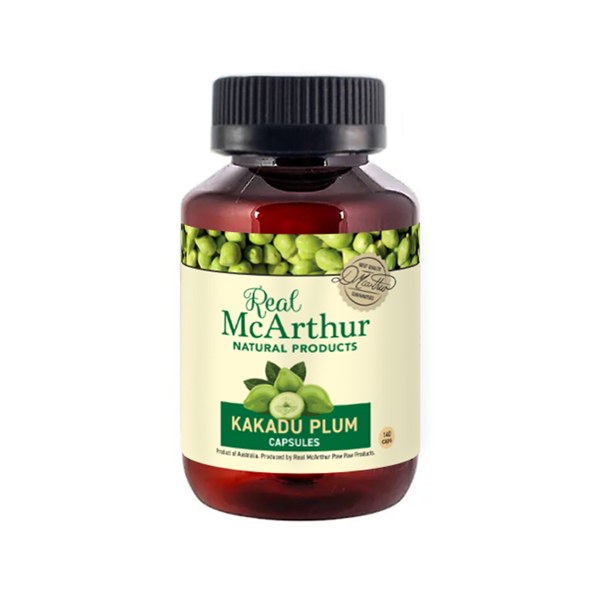
If powder isn’t your style, our Kakadu plum capsules hold the identical 100% pure farm-grown, freeze-dried powder, pre-measured: 500mg per capsule, 140 per bottle, 70 grams of pure powder. Every capsule twists open in a second, so you can tip that 500mg straight into a smoothie, yoghurt or juice, with no scales, no scoops and no guessing.
8. Make your own capsules
Here’s one nobody tells you: with a simple capsule press (an inexpensive kitchen gadget), you can fill your own capsules from loose powder, or skip the work and grab ours ready-made.
How to choose Kakadu plum powder: 5 things to check
1. How many grams of actual powder are in the bottle?
This is the big one. With capsules, multiply the milligrams per capsule by the number of capsules. Ours is 500mg x 140 capsules = 70 grams. Bottles vary from under 10 grams to 70 grams, so work out the price per gram of actual powder, not per bottle. It changes which product is really the cheapest.
2. Is it 100% pure, or blended?
Read the ingredients list. It should say one thing: Kakadu plum. No fillers, no flow agents, no “proprietary blend”.
3. Where was the fruit grown?
Look for clearly stated Australian origin. Ours is farm-grown in Australia, stated plainly because it’s true.
4. Has it been laboratory tested, for what’s in it and what’s not?
Good Kakadu plum powder should come with real test results, not just marketing words. Ask any seller two things. What’s in it? Ours is tested at 12.1% natural vitamin C, a real figure from a real certificate. What’s not in it? Ours comes back clean from an Australian laboratory for heavy metals and microbiological safety. If a seller can’t show you that, ask why.
5. Is the seller Australian-owned?
Then your money stays with the people doing the work.
Where to buy Kakadu plum in Australia
- Direct from the source. Buying direct usually means fresher stock and better value. Our Kakadu plum capsules are available now at $64.95 for 140, which is 46c a day at one a day (see how they compare on price), and our 80g loose powder is coming soon for the smoothie makers.
- Health food stores carry various brands. Take the checklist above with you.
- Online marketplaces are convenient, but check point 1 carefully, because listings often hide the grams.
As with everything we make at Real McArthur: no nonsense, clearly labelled, Australian through and through. Shop Kakadu plum: our capsules and powder →
What are the side effects of Kakadu plum?
Kakadu plum is a food, not a medicine. The fruit is very tart and naturally acidic, which is why people use a quarter to half a teaspoon of powder at a time rather than a spoonful.
It also contains oxalate. A normal serve has about as much as a cup of raspberries, far less than spinach. If you have kidney problems or have had kidney stones, talk to your doctor first. See the oxalate numbers →
If you’re pregnant, breastfeeding, taking any medication or managing a health condition, check with your health professional before adding a new food to your routine.
Kakadu plum questions, answered
What is Kakadu plum used for?
Today it’s eaten as a powder in smoothies, juice, yoghurt and breakfast, taken in capsules, used in skincare, and cooked into jams, sauces and desserts. Traditionally, Aboriginal people ate it for energy on long walks and hunting trips and pulped it into a drink.
What is Kakadu plum good for?
Kakadu plum is known for one thing above all: vitamin C. It’s recognised as one of the richest natural sources of vitamin C of any fruit on earth, and it’s a food, eaten as a powder or in capsules.
Why is Kakadu plum so special?
Its recorded vitamin C concentration is among the highest of any fruit in the world, and it’s a uniquely Australian food with thousands of years of history.
What are the benefits of vitamin C?
Vitamin C contributes to normal immune system function, contributes to the reduction of tiredness and fatigue, and contributes to cell protection from free radical damage.
Does vitamin C help with iron?
Vitamin C contributes to iron absorption from food. Try a little Kakadu plum powder with iron-rich foods such as spinach, lentils or beans.
Can I open the capsules and use the powder?
Yes. Every capsule twists apart in a second. Inside is exactly 500mg of the same freeze-dried powder, already weighed, so there’s nothing to measure. Tip it into a smoothie, juice, yoghurt or your breakfast.
What is the English name for Kakadu plum?
Kakadu plum, billy goat plum (billygoat plum), green plum or salty plum. Its scientific name is Terminalia ferdinandiana.
Is Kakadu plum the same as gubinge?
Yes. Gubinge is the Kimberley name for the same fruit, and billy goat plum is another name you’ll hear in the Northern Territory.
Is Kakadu plum related to ordinary plums?
No. It’s a completely different plant family. The name comes from its plum-like shape and colour, not its relatives.
What does a Kakadu plum look like?
A small, pale-green, egg-shaped fruit about the size of an olive, with a large hard seed inside. It grows on a slender tree with large round leaves and spikes of creamy-white flowers. See the photo of Kakadu plums on the tree →
What does Kakadu plum taste like?
Tart and fresh, with a sharp, citrusy bite. Think green apple with a bush-food edge. In a smoothie it disappears into the mix.
Is Kakadu plum safe to consume?
Yes. It’s a traditional Australian bushfood that has been eaten for tens of thousands of years. It’s very tart, so use a little at a time. It contains natural oxalate, so if you have kidney problems or have had kidney stones, talk to your doctor first.
What does Kakadu plum do to skin?
Kakadu plum is rich in vitamin C, and vitamin C contributes to normal collagen formation for the normal function of skin. It’s a favourite skincare ingredient for that reason. If you use the powder on your skin, patch-test first.
When is Kakadu plum in season?
The trees flower from August to October, and the fruit ripens at the end of the tropical summer, between March and May (Australian Government, Kakadu National Park). Because that window is short, the fruit is usually freeze-dried so it can be used all year.
Is freeze-dried Kakadu plum as good as fresh?
Freeze-drying takes the water out without cooking the fruit, and studies comparing drying methods consistently find much better vitamin C retention from freeze-drying than from hot-air drying. Our powder is independently lab tested at 12.1% natural vitamin C.
How much vitamin C is in Kakadu plum powder?
Ours is laboratory-tested at 12.1% natural vitamin C, which is 121mg in every gram and about 60mg in each 500mg capsule.
How much vitamin C does an adult need a day?
45mg, according to Australia’s Nutrient Reference Values from the NHMRC. One of our Kakadu plum capsules gives you 60mg.
Is Kakadu plum powder a vitamin C powder?
Yes, a natural one: whole fruit, lab tested at 12.1% natural vitamin C, with no synthetic ascorbic acid.
How much Kakadu plum powder should I use?
Start with around a quarter to half a teaspoon and adjust to taste. It’s concentrated.
Can I cook with Kakadu plum powder?
You can, but heat reduces vitamin C, so it’s best in cold or warm foods, not baked ones.
Is the powder the same as your capsules?
Yes. Our capsules hold the identical 100% pure Australian farm-grown powder, just pre-measured at 500mg each, and every capsule twists open if you’d rather use it loose.
What’s a fair price for Kakadu plum powder?
Work it out per gram of actual powder, not per bottle. Bottles vary from under 10 grams to 70 grams of powder, so per gram is the honest comparison.
Is Kakadu plum powder tested for heavy metals?
Ours is. It’s independently tested by an Australian laboratory and comes back clean for heavy metals and microbiological safety.
Can I buy Kakadu plum fresh?
Rarely. The fresh fruit has a short season and mostly stays in the north, so powder is how most of Australia buys it.
Where can I buy Kakadu plum in Australia?
Right here. Our Kakadu plum capsules are in the shop now, farm-grown in Australia, with loose powder on the way.
Where does your Kakadu plum come from?
It’s farm-grown in Australia, and nothing else goes in the bag.
What did Aboriginal people use Kakadu plum for?
As a food for energy on long walks and hunting trips, pulped into a drink, and traditionally as medicine. The red sap was made into a stain.
Where is Kakadu plum found in Australia?
Across tropical northern Australia, from Broome to Cape York in Queensland. See where and when it grows.
Kakadu plum nutrition, nutrient by nutrient →
Sources
- Kakadu National Park, Parks Australia: Kakadu plum (season, uses, Bininj and Mungguy food)
- University of Queensland, QAAFI: Kakadu plum research program
- NHMRC Nutrient Reference Values: Vitamin C (45mg a day for adults)
- Australian Government 2009 native foods report: vitamin C, antioxidant (FRAP, ORAC) and compound testing. Full figures: Kakadu plum vitamin C, antioxidants
- Foods (2018), Kakadu plum seed kernel composition. Full figures: the Kakadu plum seed
- Tannin research including terminalagin (2024) and Griffith University compound work: Kakadu plum tannins
- The Lancet (1982): Kakadu plum, “an outstanding food source of vitamin C”
- Our own independent laboratory certificate: 12.1% natural vitamin C, genuine Terminalia ferdinandiana, heavy metals and microbial testing
Kakadu plum powder is a food, not a medicine, and is not intended to diagnose, treat, cure or prevent any disease or condition.
Keep reading: why we blend Kakadu plum into our paw paw face cream · the Gubinge story · the Kakadu plum powder guide · paw paw vs papaya