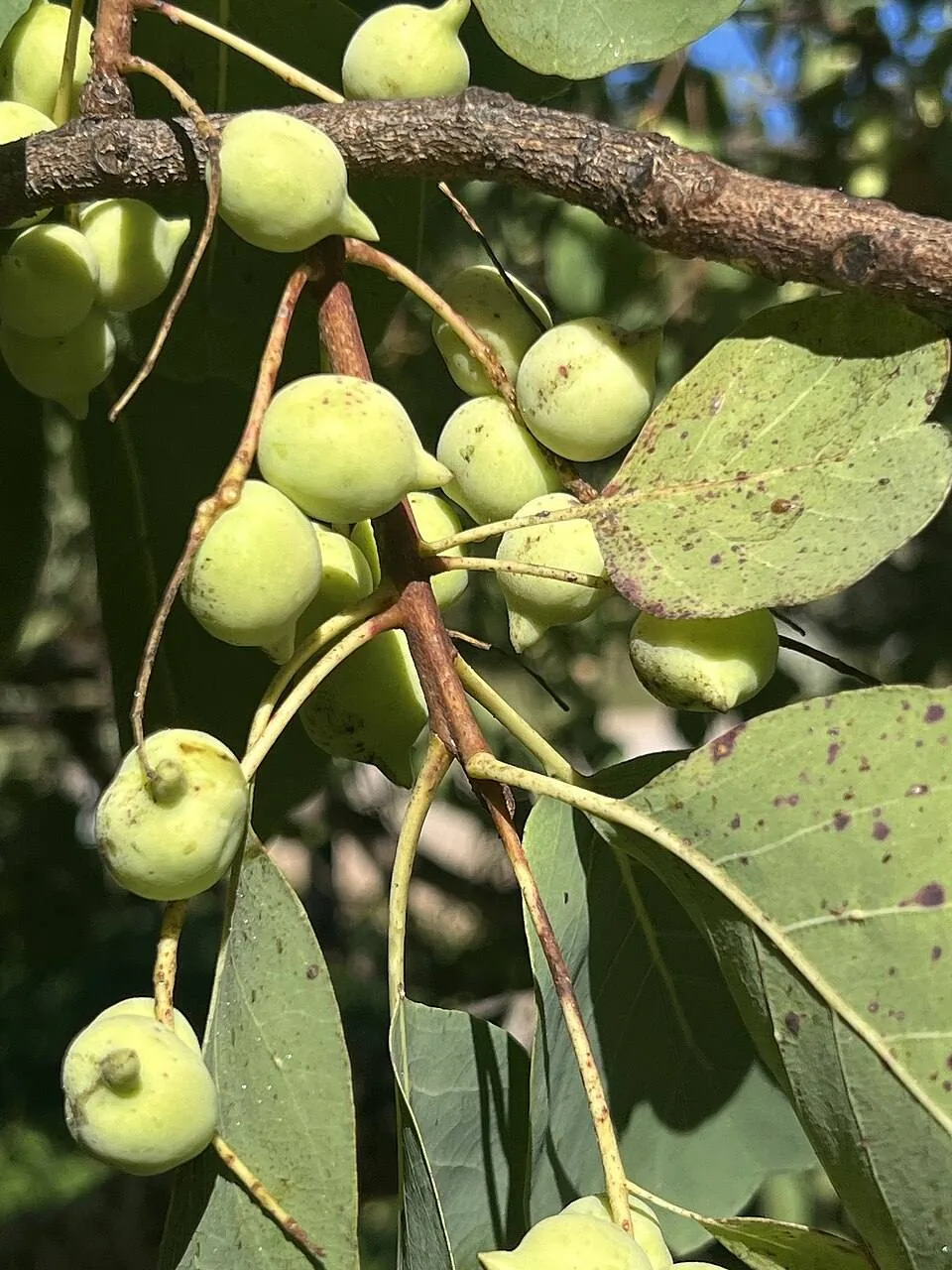
Ask most websites about Kakadu plum benefits and you’ll get one answer: vitamin C. It’s true. Kakadu plum has the highest vitamin C ever recorded in a fruit. Ours is lab tested at 240 times the vitamin C of a fresh orange, gram for gram. But it’s only the start of the story.
Inside this small green fruit, scientists have measured ten minerals, three vitamins, natural pigments, a whole family of tannins and flavonoids, and a seed that’s almost a third protein. The Australian Government’s own laboratory study found “over 100 compounds” in the fruit. There were so many that they couldn’t name them all.
This page puts everything the universities and government scientists have found in one place, in plain words, with every study listed at the bottom. It’s about the fruit itself. Kakadu plum grows wild across northern Australia, and every tree is a little different, so the numbers you’ll see are the ranges the studies found.
Kakadu plum benefits at a glance
In 100 grams of fresh fruit: 59 calories, 17.2 g of carbohydrate, 7.1 g of fibre, 0.8 g of protein and 0.5 g of fat.
In the dried fruit:
- Vitamin C: the highest ever recorded in a fruit
- Vitamin E: 6.1 mg per 100 g, about the same as avocado
- Folate: 110 micrograms per 100 g
- Potassium: 1,906 mg per 100 g, the biggest mineral by far
- Calcium: 282 mg · Magnesium: 204 mg
- Polyphenols: about 16% of the dried fruit, 4.7 times the level in blueberries
- The seed kernel: 32% protein, 35% fat, 21% fibre
A quick word on “dried”. Scientists measure Kakadu plum with the water taken out, because water changes from fruit to fruit. Dried fruit is close to what’s in a powder.
The minerals in Kakadu plum
The Australian Government’s 2009 native foods report tested Kakadu plum for eleven minerals. Here’s what 100 grams of dried fruit held:
- Potassium: 1,906 mg
- Calcium: 282 mg
- Magnesium: 204 mg
- Phosphorus: 52 mg
- Sodium: 10 mg
- Iron: 4.0 mg
- Manganese: 3.5 mg
- Zinc: 0.57 mg
- Copper: 0.30 mg
- Molybdenum: 18.5 micrograms
- Selenium: none detected
Two things stand out. Potassium outweighs sodium 182 to 1. And the calcium is about seven times what the same report measured in blueberries.
Genuine Kakadu plum also has a natural mineral fingerprint. It’s naturally high in potassium, chlorine and rubidium. Scientists at ANSTO (the Australian Nuclear Science and Technology Organisation) use that fingerprint to catch fake powders. When they tested powders sold online, every overseas “Kakadu plum” powder they tested was fake.
The vitamins: C, E and folate
Vitamin C. The same government study measured 7,253 mg of vitamin C in 100 g of dried fruit, which is 7.2% of the fruit’s dry weight. That was the highest of every fruit, herb and spice they tested. It changes a lot from tree to tree:
- In the Kimberley, single trees ranged from about 2.5% to 13% of the dried fruit
- In a study of 45 trees, the richest six, all from the Northern Territory, reached 17% to 32%
Vitamin C contributes to normal immune system function, contributes to iron absorption from food, and contributes to the reduction of tiredness and fatigue. It is necessary for normal blood vessel structure and function, and it contributes to normal collagen formation for the normal function of skin.
Vitamin E. There’s 6.1 mg in 100 g of dried fruit, the most of any native fruit in the government study and “comparable” to Hass avocado. Almost all of it (98%) is alpha-tocopherol, the main form of vitamin E.
Folate. There’s 110 micrograms in 100 g of dried fruit.
In a lab model of digestion, about 93% of the vitamin C was still there at the end.
The colours: lutein and chlorophyll
Kakadu plum’s green comes from chlorophyll a (15.9 mg per 100 g dried) and chlorophyll b (3.6 mg). It also carries lutein, a natural yellow pigment, at 1.5 mg per 100 g. That’s more than Hass avocado’s 0.6 to 1.05 mg. The government lab found no beta-carotene and none of the red and purple pigments found in berries.
The 11 tannins in Kakadu plum, by name
Tannins are the natural compounds that give Kakadu plum its sharp, mouth-drying bite, and they’re the biggest group of plant compounds in the fruit. A 2022 University of Queensland study of wild Northern Territory fruit named eleven:
- Corilagin, the most plentiful at about 1.6 to 1.8 g per 100 g dried in ripe fruit
- 3,4,6-tri-O-galloyl-glucose, about 1.0 to 1.4 g
- Ellagic acid, about 0.65 to 0.73 g in its free form
- Geraniin
- Elaeocarpusin
- Chebulagic acid
- Chebulinic acid
- Chebulic acid
- Punicalagin
- Castalagin
- Helioscopin B
The list keeps growing. Researchers have since reported a brand-new tannin in Kakadu plum juice and named it terminalagin. Griffith University researchers also found punicalin.
Ellagic acid deserves its own mention. Counted in all its forms, Kakadu plum held 2.8 to 3.4 grams per 100 grams dried. Between trees, it ranged from about 3% to 14% of the dried fruit. Scientists once thought only a few fruits, such as strawberries, raspberries and muscadine grapes, were good sources of it.
Flavonoids, stilbenes and the other compounds
Beyond the tannins, researchers have named:
- Flavonoids: quercetin, rutin, luteolin and vitexin. Glycosides of kaempferol and hesperetin were also found, and possibly catechin types.
- Stilbenes (the family resveratrol belongs to): resveratrol, resveratrol glucoside, pentahydroxystilbene, combretastatin and combretastatin A-1
- Phenolic acids: gallic acid, protocatechuic acid and chlorogenic acid
- More from the tannin family: trimethyl ellagic acid, ethyl gallate, gallocatechin and pyrocatechol glucuronide
Altogether, polyphenols make up about 16% of the dried fruit. In the government’s lab tests, Kakadu plum’s antioxidant power measured 10.5 times blueberry’s on one test and 5.7 times on another. About a quarter of that came from the fat-soluble part, such as vitamin E, lutein and chlorophyll, not just the vitamin C.
What happens to these compounds once you eat them? University of Queensland researchers found that gut microbes break the big compounds into smaller ones, which showed even higher antioxidant activity in the lab.
Sugars and acids: why it tastes so sharp
Kakadu plum isn’t a sweet fruit. Kimberley fruit held 16.6 g of natural sugar per 100 g dried: fructose (7.3 g), glucose (6.6 g) and sucrose (2.6 g). Fruit from around Darwin had only 5.2 g.
As the fruit ripens on the tree, the sugar roughly doubles. The acidity rises from 2.8% to 4.8%, and the tannins drop. A ripe Kakadu plum is sweeter and sharper at the same time, with less of the mouth-drying bite. Its natural acids include vitamin C (ascorbic acid), ellagic acid, gallic acid and oxalic acid.
How many compounds are in Kakadu plum?
More than anyone has managed to count. The Australian Government’s laboratory saw over 50 compounds with one method, and over 100 with a more sensitive one. So many overlapped that most couldn’t be named. The names on this page are the ones science has confirmed so far, and new ones are still being found.
What’s in the Kakadu plum seed?
The seed is the part nobody writes about. When Kakadu plum is pureed commercially, every 100 kg of fruit leaves about 22 kg of seed, and most of it is thrown away.
The seed is a hard, woody stone of about half a gram. Its shell holds almost nothing (0.1 to 0.3% polyphenols). Inside is a tiny kernel, only 0.04 g, and that’s where the goodness is. In 2018, Queensland researchers analysed kernels from 5,000 kg of fruit gathered from more than 600 wild trees in the Northern Territory.
The dried kernel is:
- 35% fat
- 32% protein
- 21% fibre
- 2,065 kJ per 100 g
Its fats: half is linoleic acid, an omega-6 fat (50%). Then comes oleic acid (29%), palmitic acid (12%) and stearic acid (7%), plus small amounts of arachidic, behenic, myristic, palmitoleic and eicosenoic acids. About four-fifths of the fat is unsaturated.
Its minerals (per 100 g of dried kernel):
- Phosphorus: 873 mg
- Potassium: 669 mg
- Calcium: 539 mg
- Magnesium: 421 mg
- Sodium: 120 mg
- Manganese: 9.1 mg
- Iron: 6.1 mg
- Zinc: 6.0 mg
- Strontium: 5.0 mg
- Copper: 2.5 mg
- Boron, nickel, cobalt, selenium and molybdenum: small amounts
- Heavy metals: very low
The researchers concluded the kernel could be a new source of protein.
The leaves and bark
The rest of the tree is different again:
- Leaves: about 6 times the fruit’s ellagic acid (5,848 mg against 976 mg per 100 g dried, from the same trees) and about 3 times its calcium, but almost no vitamin C. Young leaves have none.
- Bark: the most polyphenols of any part of the tree (18 to 23.5 g per 100 g dried), and the richest in saponins and condensed tannins
- In food research: Queensland researchers are testing fruit and leaf extracts as natural food preservatives
Aboriginal people have their own long history with the bark and the fruit. Read it in What Is Kakadu Plum?
Kakadu plum side effects: oxalate, in proportion
Kakadu plum contains oxalate, and some websites make a lot of that. Here are the real numbers, gram for gram and serve for serve.
Oxalate per 100 g of dried food (a Queensland Government and UQ study):
- Kakadu plum leaves: 1,636 mg
- Star fruit: 2,220 mg
- Kakadu plum whole fruit: 2,633 to 2,717 mg
- Bamboo shoots: 2,740 mg
- Spinach: 3,720 to 14,651 mg
- Rhubarb: 4,296 to 20,875 mg
Per serve (US Oxalosis & Hyperoxaluria Foundation, where under 25 mg is “low”):
- Half a gram of dried Kakadu plum: about 7 to 14 mg (low)
- A cup of raspberries: 21 mg
- A kiwi fruit: 27 mg
- A quarter cup of almonds: 107 mg
- A star fruit: 269 mg
- Half a cup of boiled spinach: 493 mg
- A cup of raw rhubarb: 1,293 mg
The seeds aren’t the problem. When scientists screened most of the seeds out, the oxalate barely changed.
Not all oxalate is the same. Oxalate already bound to calcium is absorbed far less than the soluble kind. Kakadu plum’s is mostly the soluble kind, which is why the fruit is still classed as high-oxalate by weight. Your body also makes some oxalate from vitamin C, from any source. And a gut bacterium called Oxalobacter formigenes lives on nothing but oxalate and breaks it down.
If you have kidney problems, or you’ve had kidney stones, talk to your doctor before adding Kakadu plum to your routine, just in case. If you’re pregnant, breastfeeding or taking medication, check with your health professional too.
Why no two Kakadu plums are the same
Most Kakadu plum still comes from wild trees, and they vary enormously. In a 45-tree study, vitamin C ran from about 17% to 32% in the best trees, and ellagic acid from 3% to 14%. Kimberley fruit had three times the sugar of Darwin fruit. The researchers point to soil, temperature, sunshine, rainfall and ripeness. That’s why two labs can test Kakadu plum and get very different numbers. Neither is wrong.
Kakadu plum benefits: questions people ask
What is Kakadu plum good for? It’s one of the richest natural food sources of vitamin C, and it also carries vitamin E, folate, potassium, calcium, magnesium and a large family of plant compounds. Vitamin C contributes to normal immune system function and to iron absorption from food.
Is Kakadu plum high in vitamin C? Yes. It holds the highest vitamin C ever recorded in a fruit. The Australian Government’s study measured 7.2% of the dried fruit, and the best trees reach over 30%.
What is in the Kakadu plum seed? The kernel inside the stone is 35% fat, 32% protein and 21% fibre when dried. It’s rich in phosphorus, potassium, calcium and magnesium.
What minerals are in Kakadu plum? Potassium, calcium, magnesium, phosphorus, sodium, iron, manganese, zinc, copper and molybdenum. Potassium is by far the biggest.
What are the side effects of Kakadu plum? It contains oxalate. A normal serve holds about as much as a cup of raspberries, far less than spinach. If you have kidney problems or have had kidney stones, talk to your doctor first.
Can you eat Kakadu plum raw? Yes. For the Bininj and Mungguy people of Kakadu, the ripe plums are usually eaten raw, and sometimes made into jam. They’re very tart.
What does Kakadu plum do for skin? It’s rich in natural vitamin C, and vitamin C contributes to normal collagen formation for the normal function of skin. There’s more in Kakadu plum skin care.
Does Kakadu plum have protein? The fresh fruit has very little, about 0.8 g per 100 g. The seed kernel is 32% protein.
Kakadu plum is a food, not a medicine. Our products are food, not therapeutic goods, and are not intended to diagnose, treat, cure or prevent any disease or condition.
Keep exploring: What Is Kakadu Plum? · Gubinge: The Story of Kakadu Plum · Kakadu Plum Powder guide · Kakadu plum skin care
Sources
Every number on this page comes from these studies and official sources.
- Konczak I, Zabaras D, Dunstan M, Aguas P, Roulfe P, Pavan A. Health Benefits of Australian Native Foods: An evaluation of health-enhancing compounds. RIRDC (Australian Government) Publication 09/133, 2009. Read it
- Akter S et al. Chemical and Nutritional Composition of Terminalia ferdinandiana (Kakadu Plum) Kernels: A Novel Nutrition Source. Foods, 2018. Read it
- Phan ADT et al. Hydrolysable tannins, physicochemical properties, and antioxidant property of wild-harvested Terminalia ferdinandiana fruit at different maturity stages. Frontiers in Nutrition, 2022. Read it
- Bobasa EM et al. Nutritional and Functional Properties of Terminalia ferdinandiana Fruits Wild Harvested from Western Australia. Foods, 2024. Read it
- Zhou Y et al. Bioactive Properties of Kakadu Plum-Blended Products. Molecules, 2023. Read it
- Williams DJ et al. Organic acids in Kakadu plum (Terminalia ferdinandiana): The good (ellagic), the bad (oxalic) and the uncertain (ascorbic). Food Research International, 2016 (Queensland Department of Agriculture and Fisheries and UQ). Read it
- Akter S et al. In vitro Bioaccessibility and Intestinal Absorption of Selected Bioactive Compounds in Terminalia ferdinandiana. Frontiers in Nutrition, 2022. Read it
- Akter S et al. Antioxidant Rich Extracts of Terminalia ferdinandiana Inhibit the Growth of Foodborne Bacteria. Foods, 2019. Read it
- Chaliha M et al. Antimicrobial Activity, Total Phenolic and Ascorbic Acid Content of Terminalia ferdinandiana Leaves at Various Stages of Maturity. Current Research in Nutrition and Food Science, 2020. Read it
- Konczak I, Maillot F, Dalar A. Phytochemical divergence in 45 accessions of Terminalia ferdinandiana (Kakadu plum). Food Chemistry, 2014. Read it
- Cock IE, Matthews B, Basson AE. Liquid Chromatography-Mass Spectrometry Metabolomic Analysis of Terminalia ferdinandiana Fruit Extracts. Molecules, 2025 (Griffith University). Read it
- Terminalagin, a New Ellagitannin from Kakadu Plum (Terminalia ferdinandiana). PubMed 41391874. Read it
- Keaney M, Mazumder D et al. Authenticating genuine Kakadu plum (Terminalia ferdinandiana) powders from fakes using stable isotope analysis and elemental profiling. Food Control, 2024 (ANSTO and Macquarie University). Read it
- University of Queensland News. Science backs traditional knowledge of Kakadu plum health benefits, 18 September 2024. Read it
- Parks Australia. Kakadu plum, Kakadu National Park. Read it
- Oxalosis & Hyperoxaluria Foundation. Oxalate List, February 2024. Read it
- Daniel SL et al. Forty Years of Oxalobacter formigenes, a Gutsy Oxalate-Degrading Specialist. Applied and Environmental Microbiology, 2021. Read it
- Brand Miller J, James KW, Maggiore PMA. Tables of Composition of Australian Aboriginal Foods. Aboriginal Studies Press (fresh-fruit figures).