Kakadu Plum for Skin: Vitamin C Inside and Out

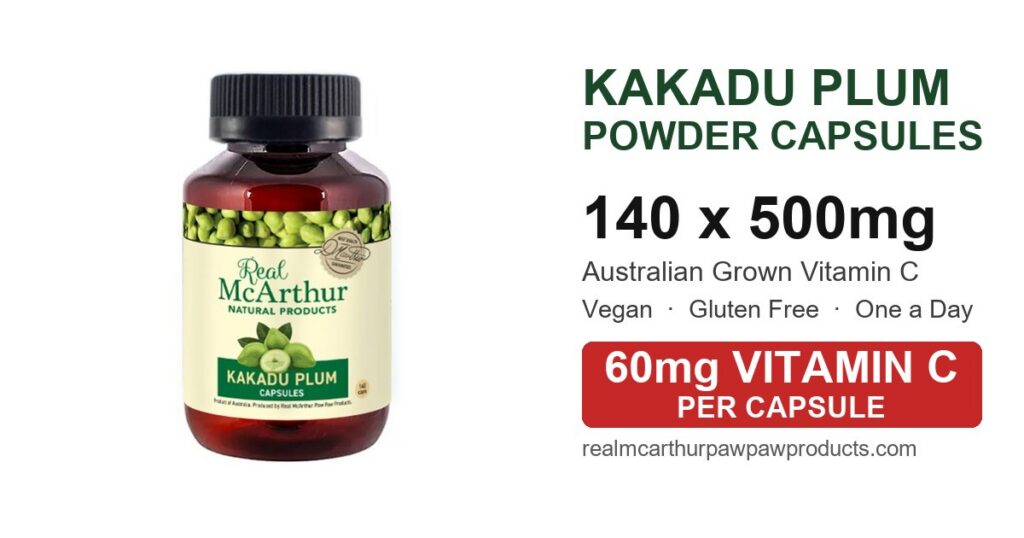
Walk down any skincare aisle in Australia and you’ll spot it: Kakadu plum (also called gubinge or billy goat plum) on the label of serums and creams. There’s a simple reason this bush fruit became a skincare favourite — vitamin C, in world-record amounts. Kakadu plums on the tree. Photo: Allthingsnative, CC BY 4.0 Why skincare loves Kakadu plum Vitamin C is one of the most used ingredients in modern skincare, and Kakadu plum carries the highest recorded natural vitamin C content of any fruit on earth. Our own powder is laboratory-tested at 12.1% natural vitamin C. That’s why the little green fruit from Australia’s north now appears in products around the world. From the inside: eating your vitamin C Vitamin C is an essential nutrient your body can’t make — it has to come from food. Many people simply add Kakadu plum to what they already eat: a spoonful in a smoothie, a sprinkle on breakfast — or the no-fuss option, our Kakadu Plum Capsules (140 × 500mg of pure farm-grown powder). From the outside: on your skin Two easy ways to put Kakadu plum on your skin: 1. The simple DIY way — mix a small amount of powder with plain yoghurt or honey for a weekend face mask. Patch-test first, as with any new skincare. 2. The ready-made way — Kakadu plum is one of the ingredients we blend into our own Paw Paw Face Cream, alongside 30% paw paw extract and hyaluronic acid, on an organic aloe vera base instead of water. Lightweight, hydrating, made in Australia. Our Paw Paw Face Cream — with Kakadu plum, 30% paw paw extract and hyaluronic acid. The honest word on skin claims You’ll see wild promises about Kakadu plum online. We keep it simple and truthful: it’s a fruit extraordinarily rich in vitamin C, loved by skincare makers for exactly that reason. Our products are cosmetics and foods — they make no therapeutic claims, and anyone who promises you a cure is selling something else. Keep exploring: What Is Kakadu Plum? · Benefits of the powder · The 2026 buying guide · Gubinge: the story. Kakadu plum for skin FAQ Is Kakadu plum good for skin? It’s one of skincare’s most used Australian ingredients, prized for its naturally high vitamin C. Ours is lab-tested at 12.1%. Can I put Kakadu plum powder directly on my face? Mixed into a simple mask base like yoghurt or honey, yes — patch-test first. Which of your products contains Kakadu plum for skin? Our Paw Paw Face Cream blends Kakadu plum with 30% paw paw extract and hyaluronic acid. Do you make medical claims about Kakadu plum? No — our products are cosmetics and foods. We state what’s in them, never what they treat. Kakadu plum powder is a food, not a medicine. If you’re pregnant, breastfeeding or managing a health condition, check with your health professional before adding new foods to your routine.
Gubinge: The Story of Kakadu Plum

Before it was a superfood, it was simply food. Gubinge is one of the oldest names for the fruit Australia now calls the Kakadu plum — a small green fruit that people in this country’s north have been gathering for tens of thousands of years. Gubinge (Kakadu plum) on the tree. Photo: Allthingsnative, CC BY 4.0 One fruit, many names Depending on where you are in northern Australia, the same fruit answers to different names: gubinge (from the Kimberley), murunga, billygoat plum, green plum, and the name most Australians know today — Kakadu plum. Botanists call it Terminalia ferdinandiana. Whatever the name, it’s the same pale, olive-sized fruit with a single stone, growing on trees across the tropical woodlands of the Kimberley, the Top End and Arnhem Land. The oldest superfood story in the world Aboriginal people have gathered this fruit as a food for tens of thousands of years — making it, by any measure, one of the oldest continuously eaten fruits on earth. Harvest follows the wet season, roughly January to March, when the trees fruit across the north. Traditional gathering commonly took the fallen fruit — a naturally sustainable practice that leaves the trees to keep producing, and one that still guides ethical harvesting today. We tell that story with respect: it’s not our story — it belongs to the Traditional Owners of northern Australia. What we can do is honour it by being honest about our own fruit (more on that below). Why the world suddenly noticed When food scientists measured the vitamin C in Kakadu plum, the numbers looked like typing errors: the highest recorded natural vitamin C content of any fruit on earth — roughly 50 to 100 times that of an orange, gram for gram. The fruit also carries other natural plant compounds like ellagic and gallic acid. Almost overnight, a quiet bush food became an international superfood — turning up in powders, capsules and skincare across the world. From bush food to your kitchen Our 100% pure Kakadu plum powder — capsules available now. Today most Australians meet gubinge as a freeze-dried powder — the fresh fruit rarely leaves the north. Ours is 100% pure, farm-grown Australian Kakadu plum — laboratory-tested at 12.1% natural vitamin C and clean for heavy metals — grown on Australian farms, and we say so plainly because buyers deserve to know exactly where their fruit comes from. You’ll find it in our Kakadu Plum Capsules (140 × 500mg), with 80g loose powder coming soon. Keep exploring: What Is Kakadu Plum? · the benefits of the powder · 8 ways to use it · the 2026 buying guide. Gubinge FAQ What is gubinge? Gubinge is a Kimberley name for the Kakadu plum (Terminalia ferdinandiana) — the same native Australian fruit. Is gubinge the same as Kakadu plum? Yes — one fruit, many names: gubinge, murunga, billygoat plum, green plum, Kakadu plum. What does gubinge taste like? Tart, fresh and citrusy — sharp on its own, beautiful blended into food. Where does gubinge grow? Across tropical northern Australia — the Kimberley, the Top End and Arnhem Land — fruiting in the wet season, roughly January to March. Kakadu plum powder is a food, not a medicine. If you’re pregnant, breastfeeding or managing a health condition, check with your health professional before adding new foods to your routine.
Where to Buy Kakadu Plum Powder in Australia (2026 Guide)

Kakadu plum (also called gubinge or billy goat plum) powder is sold all over Australia these days — health food shops, markets, and plenty of online stores. But bottles that look identical can contain wildly different amounts of actual fruit. Before you buy from anyone — including us — run through this five-point checklist. Kakadu plums on the tree. Photo: Allthingsnative, CC BY 4.0 The 5 things to check before you buy Kakadu plum powder 1. How many grams of actual powder are in the bottle? This is the big one. With capsules, multiply: milligrams per capsule × number of capsules. Some products contain around 100mg per capsule — a whole bottle might hold under 10 grams of powder. Ours holds 500mg per capsule, 140 capsules — 70 grams. Always do this maths first; it changes which product is really the cheapest. 2. Is it 100% pure — or blended? Read the ingredients list. It should say one thing: Kakadu plum. No fillers, no flow agents, no “proprietary blend.” 3. Where was the fruit grown? Look for clearly stated Australian origin. Ours is farm-grown in Australia — stated plainly, because it’s true. 4. Has it been laboratory tested — for what’s in it AND what’s not? Good Kakadu plum powder should come with real test results, not just marketing words. Two things to ask any seller: What’s in it: ours is laboratory-tested at 12.1% natural vitamin C — a real figure from a real certificate. What’s NOT in it: ours is independently tested by an Australian laboratory and comes back clean for heavy metals and microbiological safety. If a seller can’t show you that, ask why. 5. Is the seller Australian-owned? Your money stays with the people doing the work. Our 100% pure Kakadu plum powder — capsules available now, 80g loose powder coming soon. Where you can buy it Direct from the source — buying direct usually means fresher stock and better value: our Kakadu Plum Capsules are available now, and our 80g loose powder is coming soon Health food stores — carry various brands; take the checklist with you Online marketplaces — convenient, but check point 1 carefully; listings often hide the grams New to Kakadu plum? Start here: What Is Kakadu Plum? · then the benefits of Kakadu plum powder · then 8 easy ways to use it. Buying Kakadu plum powder FAQ What’s a fair price for Kakadu plum powder? Work it out per gram of actual powder, not per bottle — bottles vary from under 10 grams to 70 grams of powder. Per gram is the honest comparison. Is Kakadu plum powder tested for heavy metals? Ours is — independently tested by an Australian laboratory, clean for heavy metals and microbiological safety, alongside the vitamin C figure of 12.1%. Can I buy Kakadu plum fresh? Rarely — the fresh fruit has a short wet-season window and mostly stays in the north. Powder is how most of Australia buys it. Is powder or capsules better? Same thing — capsules are just pre-measured powder. Ours contain the identical 100% pure farm-grown powder either way. Kakadu plum powder is a food, not a medicine. If you’re pregnant, breastfeeding or managing a health condition, check with your health professional before adding new foods to your routine.
How to Use Kakadu Plum Powder: 8 Easy Ways

Kakadu plum (also called gubinge or billy goat plum) powder is one of the richest natural sources of vitamin C on earth — ours is laboratory-tested at 12.1% natural vitamin C. But a tub of powder is only useful if you know what to do with it. Here are eight easy ways, from breakfast to skincare. Kakadu plums on the tree. Photo: Allthingsnative, CC BY 4.0 1. Smoothies The easiest way of all — add a small spoonful to any smoothie. Its tart, citrusy bite disappears into banana, mango or berries. 2. Sprinkled over breakfast A light dusting over yoghurt, muesli or porridge. Start small — a little goes a long way. 3. In fresh juice Stir into orange or apple juice for an extra vitamin C kick from a whole Australian fruit. 4. In salad dressings Whisk a pinch into olive oil and lemon — the tartness works like a native citrus. 5. A DIY vitamin C face mask Kakadu plum is prized in skincare for its vitamin C — it’s the same ingredient we blend into our own paw paw face cream. Mix a small amount of powder with plain yoghurt or honey for a simple weekend face mask. (Patch-test first, as with any new skincare.) 6. Keep it raw where you can Heat breaks down vitamin C — so add the powder to cold or warm foods rather than baking with it, and you keep what you paid for. 7. Skip the measuring — capsules If powder isn’t your style, our Kakadu Plum Capsules hold the identical 100% pure farm-grown powder, pre-measured: 500mg per capsule, 140 per bottle — 70 grams of pure powder. Before you compare prices anywhere, check how many grams of actual powder other bottles contain. Our 100% pure Kakadu plum powder — capsules available now, 80g loose powder coming soon. 8. Make your own capsules Here’s one nobody tells you: with a simple capsule press (an inexpensive kitchen gadget), you can fill your own capsules from loose powder — or skip the work entirely and grab ours ready-made. New to this fruit? Start with What Is Kakadu Plum? and the benefits of Kakadu plum powder. Kakadu plum powder FAQ How much Kakadu plum powder should I use? Start with a small amount — around a quarter to half a teaspoon — and adjust to taste. It’s concentrated. Can I cook with Kakadu plum powder? You can, but heat reduces vitamin C — it’s best in cold or warm foods, not baked ones. Can I use Kakadu plum powder on my skin? Many people do — it’s a favourite skincare ingredient because of its vitamin C. Patch-test first. Is the powder the same as your capsules? Yes — identical 100% pure Australian farm-grown powder. Each of our capsules holds 500mg, 140 per bottle — 70 grams of pure powder. Kakadu plum powder is a food, not a medicine. If you’re pregnant, breastfeeding or managing a health condition, check with your health professional before adding new foods to your routine.
Kakadu Plum Powder Benefits: Australia’s Vitamin C Powerhouse

Kakadu plum (also called gubinge or billy goat plum) is one of the richest natural sources of vitamin C ever measured in a food — and it grows right here in Australia. Ours is laboratory-tested at 12.1% natural vitamin C, which is why this small native fruit has become one of the most talked-about superfoods in the country. What makes Kakadu plum special? Kakadu plum (Terminalia ferdinandiana, also known as gubinge) is a small green fruit from Australia’s north. What sets it apart is simple: vitamin C, in amounts almost no other food on Earth can match. Where an orange gives you a good daily dose, Kakadu plum delivers many times that, gram for gram — our own batch testing measured 12.1% natural vitamin C content. Curious about the fruit itself? Read What Is Kakadu Plum? The benefits of Kakadu plum powder 1. One of the world’s richest natural vitamin C sources. Vitamin C is an essential nutrient your body can’t make itself — it has to come from food. Kakadu plum powder is one of the most concentrated food sources available. 2. It’s the whole fruit, nothing added. Our powder is 100% pure Australian farm-grown Kakadu plum — no fillers, no additives. What’s in the fruit is what’s in the powder. 3. Natural food, not a synthetic tablet. Many vitamin C products are made in a laboratory. Kakadu plum is simply a fruit — you’re eating food, the way people have for a very long time. 4. Easy to use every day. A small amount goes a long way. How to use Kakadu plum powder Smoothies — add a small spoonful to any smoothie Sprinkle — over yoghurt, muesli or fruit Capsules — if you’d rather skip the measuring, our Kakadu Plum Capsules hold the same 100% pure powder in a vegetarian capsule Loose powder — our 80g loose powder is coming soon Kakadu plum powder FAQ How much vitamin C is in Kakadu plum powder? Ours is laboratory-tested at 12.1% natural vitamin C — among the highest concentrations found in any food. What does Kakadu plum taste like? Tart and fresh — a sharp, citrusy bite. In a smoothie it disappears into the mix. Is Kakadu plum powder the same as the capsules? Yes — our capsules contain the identical 100% pure Australian farm-grown powder, just pre-measured. Where does your Kakadu plum come from? Farm-grown in Australia, and nothing else goes in the bag. Kakadu plum powder is a food, not a medicine. If you’re pregnant, breastfeeding or managing a health condition, check with your health professional before adding new foods to your routine.
What Is Kakadu Plum? Australia’s Vitamin C Powerhouse

The Kakadu plum (also called gubinge or billy goat plum) is a small, pale-green fruit from the Top End — and most Australians have never tasted one. Yet it holds a remarkable record: one of the highest natural vitamin C concentrations ever measured in a fruit, often cited at up to 50 times that of an orange, weight for weight. What exactly is a Kakadu plum? Kakadu plum (Terminalia ferdinandiana) is a native Australian fruit that grows across the Northern Territory and the Kimberley. Depending on where you are in the north, you might hear it called gubinge, billy goat plum, or bush plum — all the same remarkable little fruit. It’s been part of this country far longer than any of us: Aboriginal communities across northern Australia harvested Kakadu plum as a traditional bush food for thousands of years — a piece of Australian food history worth knowing when you taste it. You can read more about the fruit on Kakadu National Park’s own page. The vitamin C story, in numbers An orange — the fruit most of us treat as the vitamin C benchmark — carries roughly 50 milligrams of vitamin C per 100 grams. Laboratory analysis of Kakadu plum has recorded levels many times that, which is why the “up to 50 times an orange” comparison is so often quoted. It’s also naturally rich in ellagic acid and other antioxidants, and it’s the subject of ongoing research — the University of Queensland’s food institute has an entire program dedicated to this one fruit. Kakadu plum grows wild across northern Australia — but we use farm-grown Kakadu plum powder, for the consistent quality every batch deserves. Laboratory-tested — the proof We don’t just quote the science — we test our own. Independent laboratory analysis of our Kakadu plum powder recorded 12.1% natural vitamin C — 121 milligrams in every gram. Testing confirmed it’s genuine Australian Terminalia ferdinandiana and passed every purity and safety check: heavy metals, lead and arsenic all under limit, clean on every microbial test. When we say laboratory-tested, we hold the certificate. Why is everyone talking about it? Beyond the vitamin C, the fruit itself is small — about the size of an olive — with a tart, refreshing taste somewhere between a green apple and a quandong. Too sour for most people to eat by the handful, which is why it’s usually enjoyed as a powder, in capsules, or blended into foods. Meanwhile, skincare labs around the world have made Kakadu plum extract a prized ingredient in serums and creams. An Australian original The tree is no relation to the plums in your fruit bowl — it earned the name from its plum-like look. It grows across the Top End, fruiting toward the end of the wet season. You’ll hear it called gubinge in the Kimberley, billy goat plum in the Territory, and Kakadu plum on labels around the world — but wherever you hear it, it’s the same uniquely Australian fruit, and no other country grows it. How people use Kakadu plum today Kakadu plum powder — stirred into smoothies, juice, yoghurt or muesli for a tangy vitamin C kick Kakadu plum capsules — the no-fuss option for people who want the fruit in their routine without the tart taste Skincare — Kakadu plum extract has become a prized ingredient in serums and creams worldwide Food — chefs use it in jams, sauces and desserts celebrating native Australian ingredients Our Kakadu plum range At Real McArthur we’re proud to offer Kakadu Plum Capsules made with farm-grown Australian Kakadu plum — and our loose Kakadu plum powder is coming soon for the smoothie makers. As with everything we make: no nonsense, clearly labelled, Australian through and through. Quick answers From the Top End to your door — Kakadu plum, Australia’s own.Shop Kakadu Plum → Keep reading: paw paw vs papaya · why we blend magnesium into our paw paw cream You can take it as Kakadu plum capsules today, and our loose Kakadu plum powder (80g) is coming soon.