Kakadu plum nutrition is led by vitamin C. Our lab-tested powder has 121mg in every gram, which gram for gram is 240 times the vitamin C of a fresh orange.
Kakadu plum (Terminalia ferdinandiana) also carries vitamin E, folate, lutein, antioxidants at 10.5 times a blueberry and 11 named tannins. Its seed is 32% protein and rich in minerals. Australian Government lab scans found over 100 compounds in the fruit (Konczak et al., 2009).
This page takes them one at a time, with the numbers, and links to the full guide for each.
Kakadu plum nutrition at a glance
The fruit first, per 100g, from the Australian Government’s 2009 study, then the seed and our own lab-tested powder, each labelled.
| Nutrient | How much | Full guide |
|---|---|---|
| Vitamin C | Fresh fruit: 2,300 to 3,150mg per 100g. Dried fruit: 7,253mg per 100g (Government study). Our lab-tested powder: 121mg per gram (12.1%), 60mg per capsule, 240 times the vitamin C of a fresh orange, gram for gram | Vitamin C |
| Vitamin E | 6.1mg per 100g dried, the highest of the fruits tested in the Government study | Vitamin E foods |
| Antioxidants | 10.5 times a blueberry (FRAP test), 5.7 times (ORAC) | Antioxidants |
| Tannins | 11 named, plus terminalagin, found only in Kakadu plum so far | Tannins |
| Folate | 110 micrograms per 100g dried fruit | Vitamins |
| Lutein | 1.52mg per 100g dried fruit, more than a Hass avocado | Antioxidants |
| Potassium | 1,906mg per 100g dried fruit, its biggest mineral | Minerals |
| Calcium | 282mg per 100g dried fruit; 539mg in the seed | Minerals |
| Iron | 4.0mg per 100g dried fruit; 6.1mg in the seed | Minerals |
| Magnesium | 421mg per 100g in the seed; 204mg in the fruit | Magnesium |
| Protein | 32% of the dried seed kernel | Plant protein |
| Seed minerals | Zinc 6.0mg, copper 2.5mg, manganese 9.1mg, iron 6.1mg per 100g | The seed |
| Also present | Folate, lutein, ellagic acid, gallic acid, quercetin, over 100 compounds in all | Kakadu plum benefits |
Vitamin C: the headline nutrient
The Australian Government’s 2009 study found Kakadu plum had the highest vitamin C of every fruit, herb and spice it tested, recording 7,253mg per 100g of dried fruit in its own samples (Konczak et al., 2009). Our own powder is independently lab tested at 12.1% natural vitamin C, 121mg in every gram, so one 500mg capsule gives you 60mg, more than an adult’s 45mg daily need. The Government figure and ours come from different samples, and vitamin C varies naturally between trees and seasons, which is why we test our own.
Vitamin C contributes to normal immune system function, to iron absorption from food, to the reduction of tiredness and fatigue, to normal collagen formation for the normal function of skin, and to cell protection from free radical damage. The full vitamin C science →
Antioxidants and tannins
The same Government testing put Kakadu plum’s total antioxidant power at 10.5 times a blueberry on the FRAP test and 5.7 times on the ORAC test, with 4.7 times the total antioxidant compounds (Konczak et al., 2009). Most of that comes from tannins, the plant polyphenols behind the dry feel of strong tea. Researchers have named 11 in Kakadu plum, more than in any other fruit in the published research, pomegranate included, and one of them, terminalagin, appears to be unique to it. Antioxidants → · Tannins →
Vitamin E
Kakadu plum carries 6.1mg of vitamin E per 100g dried, the highest of the fruits tested in the Government study, which described it as comparable to a Hass avocado (Konczak et al., 2009). 98% of it is alpha-tocopherol, the form your body uses most readily. Vitamin E contributes to cell protection from free radical damage. Vitamin E foods, ranked →
Minerals: fruit vs seed
Most of Kakadu plum’s minerals sit in the seed kernel, which most processors throw away. We keep it. Per 100g dried:
| Mineral | Fruit | Seed |
|---|---|---|
| Calcium | 282mg | 539mg |
| Magnesium | 204mg | 421mg |
| Phosphorus | 52mg | 873mg |
| Potassium | 1,906mg | 669mg |
| Iron | 4.0mg | 6.1mg |
| Zinc | 0.57mg | 6.0mg |
| Copper | 0.30mg | 2.5mg |
| Manganese | 3.5mg | 9.1mg |
Fruit: Australian Government (RIRDC) 2009 study. Seed: Akter et al., Foods, 2018.
The published data proves it: the seed holds more than the fruit in 7 of these 8 minerals, up to 17 times more phosphorus, 10 times more zinc and 8 times more copper, while the fruit holds more potassium. That is why we keep the seed: the whole fruit, seed and all, gives you more than either part alone. What’s inside the seed → · Magnesium-rich foods →
Protein in the seed
A 2018 study measured the dried Kakadu plum seed kernel at 32% protein, just below soybeans (36%) and above pumpkin seeds (30%), lentils and chickpeas, and the researchers concluded it could be a new protein source. It’s also 35% fat, about four-fifths unsaturated. Our capsules are taken for their vitamin C, so the seed’s protein comes as a bonus rather than a protein serve. Plant based protein sources, ranked →
How the nutrients work together: collagen
Your body can’t make stable collagen without vitamin C: the two enzymes that build it need vitamin C and iron to work, copper then locks the fibres together, and manganese recycles the raw material. Kakadu plum has all four, and the seed carries the most minerals. Vitamin C contributes to normal collagen formation for the normal function of skin. What does collagen do? →
Kakadu plum’s standout nutrients
No single fruit is “the healthiest”; it depends on what you measure. On vitamin C, vitamin E, antioxidants and tannins, Kakadu plum leads the published data, and the answers below explain how.
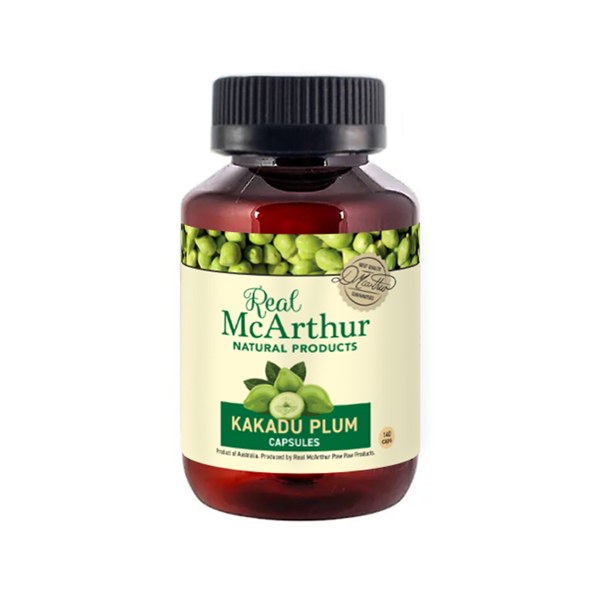
Every nutrient above, in one capsule. Real McArthur Kakadu plum capsules are the whole fruit and seed, freeze-dried: 60mg of natural vitamin C in each, 240 times the vitamin C of a fresh orange gram for gram. 140 capsules, 46 cents a day. See the capsules →
Every Kakadu plum guide
- What is Kakadu plum? (names, history, season, taste)
- Kakadu plum benefits: everything that’s inside
- Kakadu plum vitamin C: 240 times an orange, explained
- Vitamin E foods: the fruit highest in vitamin E
- What does collagen do?: and why you need vitamin C to make it
- Antioxidant-rich foods: 10.5 times a blueberry
- Tannins: 11 named, one found nowhere else
- The Kakadu plum seed: what’s inside the kernel
- Magnesium-rich foods: the seed at 421mg per 100g
- Plant based protein sources: the seed at 32%
- Kakadu plum skin care: vitamin C inside and out
- Gubinge: the story of Kakadu plum
- Kakadu plum powder guide
Kakadu plum nutrition questions, answered
What nutrients are in Kakadu plum?
Kakadu plum is richest in vitamin C (121mg per gram in our lab-tested powder), with vitamin E, folate, lutein, antioxidants, 11 named tannins, and minerals including calcium, magnesium, potassium, iron and zinc. Its seed is 32% protein. Australian Government lab scans found over 100 compounds in the fruit.
What are the health benefits of Kakadu plum?
Kakadu plum’s standout nutrient is vitamin C, and vitamin C contributes to normal immune system function, iron absorption from food, the reduction of tiredness and fatigue, normal collagen formation for the normal function of skin, and cell protection from free radical damage. It also brings vitamin E and antioxidants.
Are Kakadu plums the world’s healthiest fruit?
No single fruit can claim that, because “healthiest” depends on what you measure. Kakadu plum (Terminalia ferdinandiana) leads on several measurable nutrients. The Australian Government’s 2009 study found the highest vitamin C of any fruit, herb or spice it tested (7,253mg per 100g dried), the highest vitamin E of the fruits tested (6.1mg per 100g), and antioxidant power 10.5 times a blueberry on the FRAP test. Our lab-tested powder has 121mg of vitamin C per gram, which is 240 times the vitamin C of a fresh orange, gram for gram. Eat it as part of a varied diet with plenty of other fruit and vegetables.
What is the healthiest fruit on Earth?
There isn’t one answer, because “healthiest” depends on the nutrient. For vitamin C, Kakadu plum is the standout: gram for gram, our lab-tested powder has 240 times the vitamin C of a fresh orange. A varied mix of fruit and vegetables is healthier than any single fruit.
Can you eat Kakadu plums raw?
Yes. Aboriginal people have eaten Kakadu plums raw for tens of thousands of years. The fresh fruit is very tart and has a short season in the north, so most people eat it as freeze-dried powder or in capsules.
Does Kakadu Plum lighten skin?
Kakadu plum is popular in skincare because of its vitamin C, which is used for a brighter-looking complexion. Eaten, vitamin C contributes to normal collagen formation for the normal function of skin. There’s no strong evidence that eating it lightens skin colour.
How much vitamin C is in Kakadu plum?
The Australian Government recorded 7,253mg per 100g of dried Kakadu plum. Our own powder is lab tested at 12.1% natural vitamin C, 121mg per gram, which is 60mg in each 500mg capsule.
Is the seed of Kakadu plum edible?
Yes, when it’s processed. The dried seed kernel is 32% protein and rich in minerals, and the 2018 study found heavy metals well within food safety limits. We mill it fine with the fruit, so there’s no grit.
Sources
- Konczak I, Zabaras D, Dunstan M et al. Health Benefits of Australian Native Foods. RIRDC (Australian Government) Pub. No. 09/133, September 2009.
- Akter MS et al. Nutritional compositions and bioactive compounds of three native Australian fruits. 2018. PMC5920425.
- Food Standards Australia New Zealand (FSANZ), Standard 1.2.7: Nutrition, Health and Related Claims.
- Kakadu National Park, Parks Australia: Kakadu plum (traditional food, eaten raw).
- Tannin research including terminalagin (2024): Kakadu plum tannins.
- NHMRC Nutrient Reference Values: vitamin C.
- Our independent laboratory certificate: 12.1% natural vitamin C, genuine Terminalia ferdinandiana.
Our products are food, not therapeutic goods, and are not intended to diagnose, treat, cure or prevent any disease or condition.